From Blueprints to Sales Pitches: How Tiny Houses Spark Middle School Engagement
Robert Abraham
Instructional Strategist
OTIS Blog Feed
Teq Supports District Implementation: Beyond funding guidance, Teq provides turnkey grant alignment, hardware staging, and certified PD coaching via OTISpd.com to ensure 100% classroom adoption.
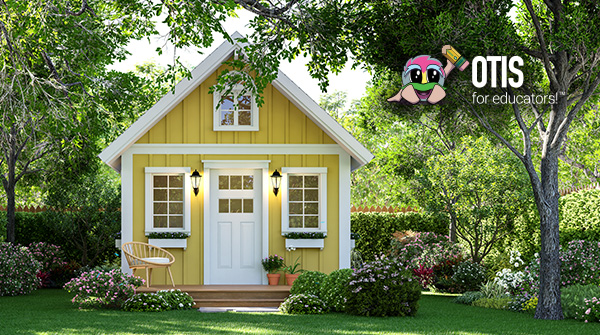
When you step into a classroom where students are genuinely leading their own learning, the energy in the room hits you immediately. There is a distinct hum of collaboration, critical thinking, and hands-on trial and error.
Lately, there have been a lot of discussions about Project-Based Learning (PBL) and its capacity to transform student outcomes. Rather than memorizing formulas for a test, PBL prompts students to investigate a complex, real-world problem over an extended period. The benefits are clear, as there is visible evidence of deeper conceptual understanding, stronger retention, and the development of essential, durable skills like teamwork and creative problem-solving.
I recently visited one of our partner schools, Carbondale Area Jr/Sr High School, and witnessed this in action. An incredible 8th-grade STEM teacher, Samantha Masco, shared how she brought these benefits to life using the Tiny Houses iBlock activity. Her students were tasked with researching energy consumption, designing sustainable floor plans, and constructing a physical tiny house model.
The success of her 6-year journey with this project proves why PBL works and transforms classroom culture. Here’s how Tiny Houses spark middle school engagement!
The Evolution of a STEM Classroom
PBL isn’t a one-and-done worksheet; it’s a dynamic framework that grows over time. When Samantha Masco first launched the Tiny House project six years ago, STEM was only taught once every six days for 42 minutes.
“It took an entire year to complete the coursework, and we were rushing at the end to complete the models,” she told me. “Since that initial year, the course has become an every-other-day course, so I am able to take more time with material and the models.”
By breaking out of a rigid time constraint, she gave her students the breathing room to truly dive into the Engineering Design Process (EDP).
Breaking Down Silos with Cross-Curricular Collaboration
One of the most powerful elements of an amazing iBlock or PBL unit is its ability to bridge different subjects. To make the tiny house project truly authentic, she teamed up with her school’s math department.
By collaborating with math teachers, she ensured they used common vocabulary and taught scale factors identically. Suddenly, concepts like ratios and measurements weren’t just abstract ideas inside a math textbook; instead, they became practical tools students needed to build the physical walls of their homes.
Taking Kids out of Their Comfort Zone
When students enter a PBL environment, they often hit an unexpected roadblock: the fear of being wrong. In traditional schooling, kids are frequently trained to look for a single correct answer.
“Another challenge students face is that they often are afraid to be creative or try something out of their comfort zone,” Masco noted. “Completing projects in STEM allows students to practice failure and overcoming challenges and struggles. They are able to see that each person can solve a problem in their own way, and it helps them to grow as students.”
PBL flips the script by making failure a feature of learning, not a bug. When a student’s architectural model shifts or an energy calculation doesn’t add up, they learn to iterate, test, and try again. This is a process we like to refer to as “failing forward.”
Pure Engagement = Zero Discipline Issues
When students have creative ownership, classroom management transforms. Because each learner found a niche, they were passionate about, whether it was 3D modeling in Tinkercad, calculating energy efficiency, architectural styling, or crafting the perfect marketing pitch, everyone found a way to meaningfully contribute to their group.
Masco shared a profound takeaway that every administrator and educator can appreciate:
“When every student is engaged, there are no discipline issues within the classroom, and everyone is actively participating. Each student takes pride in their work and feels as though they’ve been a meaningful part of the final project.”
Welcome to the Tiny Home Village
The project didn’t end when the glue dried. For the final stage of this iBlock, students stepped out of their comfort zones to pitch their homes to see if they could actually “sell” them in a mock real estate market.
This year, the school took the project to a spectacular conclusion by integrating the finished models into the school’s annual art show. They constructed an entire “Tiny Home Community” display, showcasing the student-designed houses alongside their custom floor plans and sales advertisements.
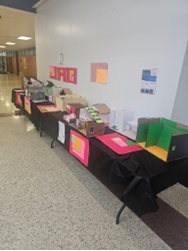
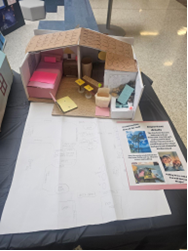
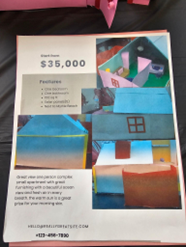
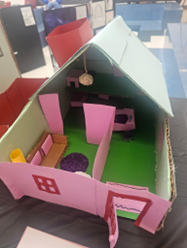
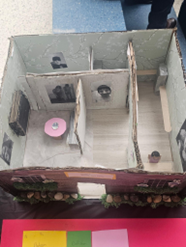
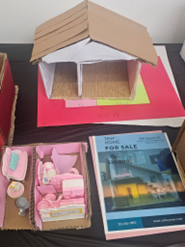 Images from Carbondale Area Jr/Sr High School art show, May 14, 2026
Seeing their hard work displayed as a unified neighborhood gave the students an immense sense of pride. Walking through the gallery, they evaluated their peers’ unique styles and realized that a single prompt had yielded dozens of completely distinct, brilliant solutions.
Bringing PBL to Your School
The success of the Tiny House project demonstrates that when we trust students with complex, open-ended challenges, they’ll consistently exceed our expectations. If you’re looking to shift away from passive learning and build an environment filled with high engagement, cross-curricular success, and genuine student pride, implementing structured PBL is the way to go. For more information about Tiny Houses or any of our other iBlocks, please visit www.iblocks.com.
For more tips, tricks, and tools for teaching in and out of the classroom, check out more content on the Teq Talk blog or our YouTube channels OTIS for educators and Tequipment.
We also offer virtual professional development, training, and support with OTIS for educators. Explore the technology and strategies that spark student success — no matter where teaching or learning are happening!
Follow us on social:
 edteq
edteq  OTIS4educators | Teq Products | iBlocks
  MyTeq
MyTeq  Teq
Teq
Related Articles & Other Recommended Reading

How to Safely Store Your AR/VR Headsets for the Summer
As the school year comes to a close, properly preparing your AR/VR hardware for summer storage is essential to extending the lifespan of your investment. Taking a few deliberate steps ensures that when teachers and students return in the fall, their headsets, controllers, and charging carts will be clean, functional, and ready for classroom use. […]
Teq Tuesdays: Summer PD Lineup
Summer is here, and so are Teq’s annual summer PD sessions! Join us on select Tuesdays in July and August for a variety of engaging professional learning experiences. Our summer PD lineup this year dives into unlocking the full potential of AI and brushing up on core Google Workspace skills. All sessions will be broadcast […]
What AI Tools Are Teachers Actually Using?
While having a variety of AI tools at your fingertips is helpful, the number of options can feel overwhelming. In our OTIS for educators session, “Demystifying AI Tools,” we’ll dive into the top AI platforms being used in education. We’ll uncover their ideal use cases, abilities, and limitations so that you can find the best fit(s) […]