Is Your Formative Assessment Actually Working? 4 Misconceptions to Avoid
Adam Fragale
Curriculum & PD Specialist
OTIS Blog Feed
Teq Supports District Implementation: Beyond funding guidance, Teq provides turnkey grant alignment, hardware staging, and certified PD coaching via OTISpd.com to ensure 100% classroom adoption.

Teachers! How familiar is this scenario? After a lesson, you ask the class, “Does everyone understand?” Your class nods back at you, smiling, and it makes you feel like teacher of the year. Then test day arrives and the average score is 52!
If this is a familiar scenario, then it’s certain that your formative assessment routine is full of red flags. Here are 4 misconceptions to avoid, along with a practical guide to see if your formative assessment is actually working.
Red Flags
Misconception #1: The “Echo Chamber” Effect
The Problem:
You ask the class a question and quickly hear two or three correct answers blurted out. Hearing that, you move on, assuming the whole class understands the concept. In reality, those fast responders are creating a false sign of mastery, and the slower-processing students are using them as a security blanket.
The Fix:
Enforce a strict no-hands-up, no blurting out rule for the first 10-15 seconds after a question. Instead, have students write down a response, key phrase, or symbol before anyone speaks. This focuses all their brains to work, rather than letting the passive listeners ride the coattails of early responders.
Misconception #2: Performative EdTech Engagement
The Problem:
You have assigned engaging, gamified quiz apps to the students. However, speed-based rewards incentivize rapid guessing over deep thinking. Many times, these games mask whether students understand why an answer was correct.
The Fix:
Don’t rely on the game’s instant scoreboard alone. Pause the game after a high-stakes question and hide the correct answer. Then ask students to justify their answer to a partner before revealing the true answer. This turns the game into a discussion generator.
Misconception #3: Correct Answers Built on Flawed Reasoning
The Problem:
A student selects the correct answer on a multiple-choice question or math problem but uses incorrect logic or a lucky guess to answer it. A standard quick check misses this, and the misconceptions just end up compounding.
The Fix:
Present a pre-solved problem that contains a subtle, logical mistake and ask students to find and explain the error rather than just solving the problem from scratch.
Misconception #4: All-or-Nothing Feedback Loop
The Problem:
You collect formative data but only use it to remediate the struggling learners while giving the rest of the class generic busywork. Adjusting instruction for everyone allows for further growth in the students who immediately mastered the concept.
The Fix:
Always have two clear immediate pathways prepared when running a quick check with your class. A targeted re-reach for students who missed the concept, as well as an extension prompt for those who mastered it instantly.
Identifying the misconceptions in your classes can be tough, especially when high participation looks like real learning. By preparing for how students arrive at their answers, you can turn your casual check-ins into useful assessment tools.
An overall look at OTIS for educators
🧠 A diverse course library
In fact, OTIS now offers over 900 courses across 50+ categories, covering everything from instructional strategies to edtech tools. Moreover, these are designed by experienced educators and align with standards like ISTE, making them practical and relevant.
📚 On-demand access
All courses are available anytime, anywhere, and also on any device–perfect for fall learning. Additionally, educators can explore tutorials, state-approved PD, and curated playlists to meet their goals.
🎓 For all roles
Whether you’re a teacher, admin, or paraprofessional, OTIS PD supports unlimited users per school or district license. This undeniably makes OTIS a great resource for team-wide growth.
You can visit OTISpd.com to sign up and also explore the full course catalog. Want help picking a course based on your interests or goals? In that case, we’d love to help with that! To learn more, visit teq.com!
Related Articles & Other Recommended Reading

How to Build an Elementary School Makerspace from Scratch
Creating a dynamic makerspace in an elementary school is one of the most transformative, yet complex, undertakings a district can pursue in 2026. When aligned properly with clear instructional goals, these innovation hubs drastically improve 21st-century skill development—specifically critical thinking, creativity, and collaboration. However, the greatest trap in makerspace procurement is buying the latest “shiny […]

Reflecting on the Past Year: Questions to Assess Your EdTech Success
Congratulations! You’ve made it to the finish line, and summer is here! All of your diligent work and dedication have paid off, and now it’s time to enjoy your hard-earned rest. After the noise of the previous school year fades, being in the classroom is likely the last thing on your mind. As a former […]
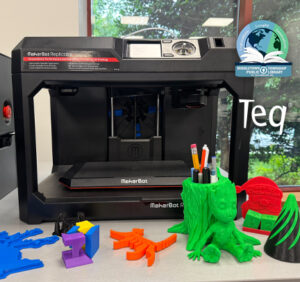
Customer Spotlight: Middletown Township Public Library
How One Library Built a Community Hub for Creativity, Connection, and Innovation When people think of libraries, they often imagine books, research, and quiet study spaces. At Middletown Township Public Library, those services remain central to the library’s mission, but today’s visitors can also design custom apparel, engrave personalized gifts, create prototypes, and learn new technical […]