How School Districts Can Fund Modern Bell, Paging, and Safety System Upgrades
Marketing Team
Blog
Teq Supports District Implementation: Beyond funding guidance, Teq provides turnkey grant alignment, hardware staging, and certified PD coaching via OTISpd.com to ensure 100% classroom adoption.
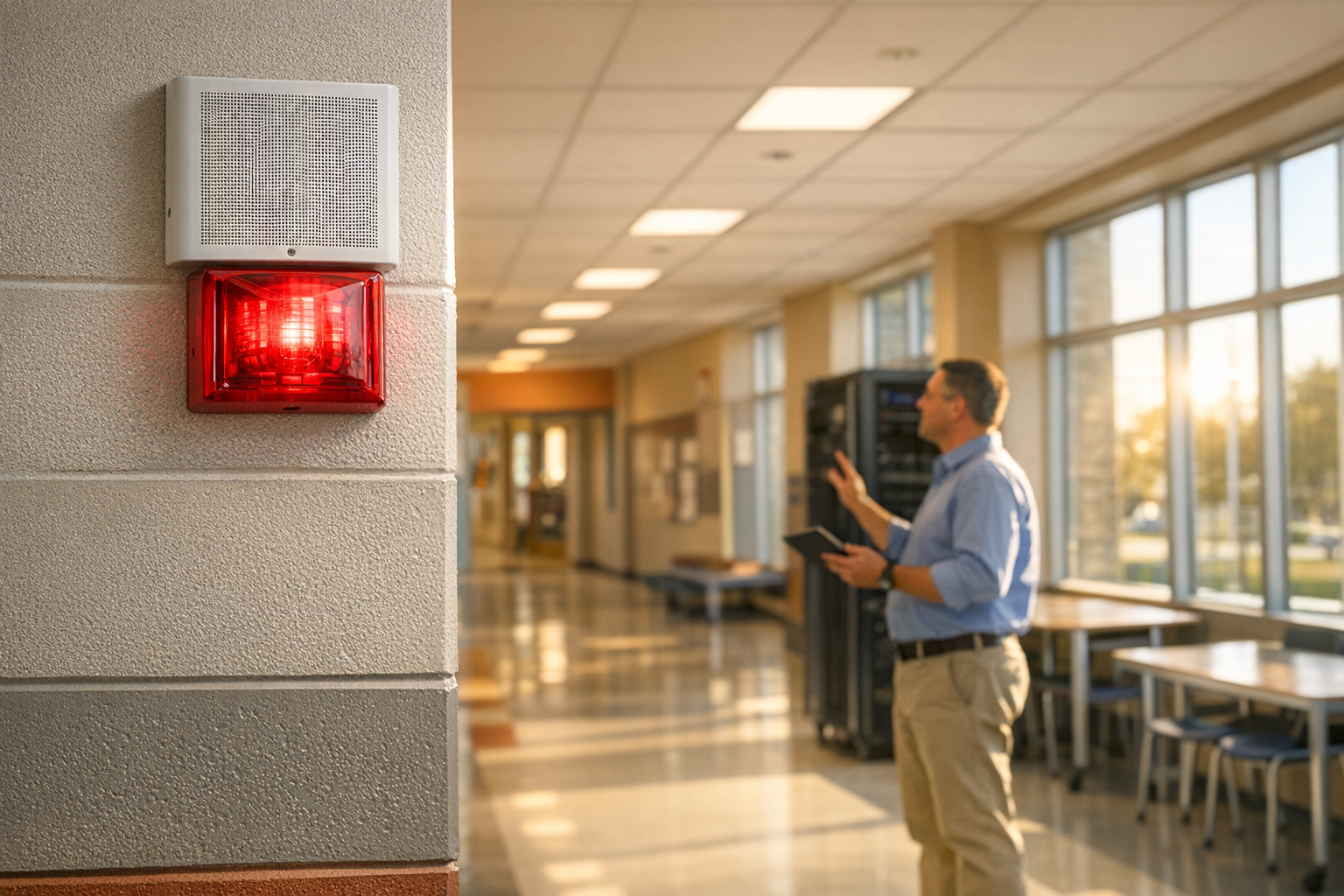
As school districts navigate the post-ESSER fiscal landscape in late 2026, technology and safety budgets have largely returned to pre-pandemic baseline constraints. This “funding cliff” poses a significant challenge for IT leaders seeking to modernize aging public address (PA) systems, school bells, and emergency infrastructure. According to an August 2026 analysis published in EdTech Magazine, districts must shift away from short-term Capital Expenditure (CapEx) “burst spending” and pivot toward sustainable, multi-stream grant management.
Funding is currently the number one unmet need cited by state educational technology leaders. Forward-thinking districts are successfully modernizing campus communications by utilizing a braided funding strategy. By combining federal formula grants, competitive safety programs, E-Rate, and prioritizing the right technology for the classroom alongside comprehensive educator professional development, K–12 leaders can successfully finance modern IP-based bell, paging, and classroom audio systems.
What is a Braided Funding Strategy for EdTech?
A braided funding strategy is the practice of stacking multiple, distinct funding sources to finance different components of a comprehensive technology upgrade without violating the spending limitations of any single grant. Because modern school communication systems require network infrastructure, hardware endpoints, software integration, and staff training, no single grant typically covers the entire scope.
By braiding Federal Communications Commission (FCC) E-Rate discounts for the underlying network with Department of Justice (DOJ) safety grants for endpoints and Title grants for training, districts can fund up to 100% of their safety hardware and technology for educators without impacting local general fund budgets.
Step 1: Maximize FCC E-Rate Program Category 2 Funds
The most cost-effective first step in deploying modern IP-based bell, paging, and audio systems is securing the network backbone. The USAC E-Rate Program provides broadband connectivity discounts ranging from 20% to 85% for K–12 schools.
According to the USAC Eligible Services List, E-Rate Category 2 covers the core network transport layer required to run modern IP communication systems.
Eligible components include:
-
Structured cabling (Cat6/fiber runs) inside buildings
-
Power over Ethernet (PoE) network switches and routers
-
Wireless Access Points (WAPs)
-
Network equipment racks and Uninterruptible Power Supplies (UPS)
-
Basic firewall protection
Because E-Rate heavily subsidizes the cabling and PoE network switches, districts can preserve their competitive safety grants specifically for the hardware endpoints like interactive panels and classroom amplifiers.
Step 2: Secure Federal Competitive Safety Grants
Once the E-Rate network backbone is established, district leaders should pursue non-dilutive competitive federal grants designed explicitly for physical security and crisis communication hardware.
DOJ COPS School Violence Prevention Program (SVPP)
The COPS SVPP Grant Program, administered by the DOJ, provides direct funding to schools to enhance physical security. Allowable costs include the acquisition and installation of technology for expedited law enforcement notification, panic alarm systems, and interactive campus paging infrastructure.
-
FY 2026 Funding Details: Up to $73,000,000 in competitive awards are available, according to the FY 2026 COPS SVPP Fact Sheet.
-
Award Limits: Recipients can receive a maximum federal share of $500,000 over a 36-month performance period.
-
Local Match: A 25% local cash match is required, though waivers exist for designated low-resourced or rural microgrant applicants.
ED School Safety Enhancement (SSE) Program
The U.S. Department of Education provides additional support through the School Safety Enhancement Program (84.184A). With an FY 2026 allocation of $93 million awarded to State Educational Agencies (SEAs), this program improves school infrastructure security and mandatory emergency preparedness coordination.
Step 3: Utilize Title Formula Grants for Endpoints and Training
Federal formula grants under the Every Student Succeeds Act (ESSA) provide predictable, annual revenue streams. Title IV-A and Title II-A are particularly flexible resources for communication upgrades.
Title IV, Part A: Student Support and Academic Enrichment
Title IV-A distributes funds across three core pillars, two of which are highly relevant to paging and safety upgrades:
-
Safe and Healthy Students (Section 4108): Funds can support physical school safety, emergency preparedness, and crisis communications. Crucially, hardware purchased under Section 4108 is not subject to the standard 15% technology infrastructure cap.
-
Effective Use of Technology (Section 4109): This section builds district capacity for digital learning and classroom sound distribution. However, statutory rules mandate that no more than 15% of Title IV-A funds allocated here may be spent on technology hardware.
Title II, Part A: Supporting Effective Instruction
Procuring high-tech paging displays and emergency alerts is only half the battle; ensuring school staff can use them during a crisis is paramount. Districts can utilize Title II-A funds to invest in ongoing educator professional development.
Title II, Part A funds will be used exclusively for the professional development of educators and school leaders regarding crisis communication. No funds from this grant will be utilized for the physical hardware purchase, system installation, or training on routine administrative operations (such as daily morning announcements or standard class-transition bell schedules).
The “School Safety” Exception
If the paging system is explicitly tied to an advanced crisis management or emergency notification system, Title II, Part A allows for training school leaders and teachers on school safety issues. [1]
To qualify under this exception, the training must meet these strict criteria: [1]
Summary of Key Funding Streams for Communication Upgrades
To assist district leaders in building grant narratives, the following matrix outlines the primary funding avenues available in the current post-ESSER environment:
|
Funding Source |
Type |
Primary Focus Area |
Key Hardware / Service Eligible |
Grant Matching / Limits |
|---|---|---|---|---|
|
COPS SVPP |
Federal Competitive |
Physical security & emergency notification |
Intercoms, panic alerts, paging endpoints |
25% local match; max $500k award |
|
Title IV, Part A (Sec. 4108) |
Federal Formula |
Safe & Healthy Students |
Physical safety tech, emergency systems |
No hardware spend cap under 4108 |
|
Title IV, Part A (Sec. 4109) |
Federal Formula |
Effective Use of Technology |
Classroom audio, instructional tools |
Max 15% spend on tech infrastructure |
|
Title II, Part A |
Federal Formula |
Effective Instruction |
Ongoing educator professional development |
100% focused on professional learning |
|
E-Rate Category 2 |
Federal Discount |
Broadband Internal Connections |
Network switches, PoE cabling, UPS |
20% to 85% discount based on NSLP |
By leveraging E-Rate Category 2 for network infrastructure, directing federal safety grants toward emergency endpoints, and utilizing Title funds for comprehensive training, school districts can modernize campus communications and create safer, more effective learning environments for 2026 and beyond.
Related Articles & Other Recommended Reading

Teq Tuesdays: Summer PD Lineup
Summer is here, and so are Teq’s annual summer PD sessions! Join us on select Tuesdays in July and August for a variety of engaging professional learning experiences. Our summer PD lineup this year dives into unlocking the full potential of AI and brushing up on core Google Workspace skills. All sessions will be broadcast […]
What AI Tools Are Teachers Actually Using?
While having a variety of AI tools at your fingertips is helpful, the number of options can feel overwhelming. In our OTIS for educators session, “Demystifying AI Tools,” we’ll dive into the top AI platforms being used in education. We’ll uncover their ideal use cases, abilities, and limitations so that you can find the best fit(s) […]

Beat the June Burnout: 7 Low-Stress PD Sessions to Prep for Next Year
The countdown is on! Whether you’re a teacher officially on break or school is still in session, we’re celebrating another successful year. You’ve earned the time off to relax and maintain your skills with OTIS for educators! We’ve got tons of engaging PD courses all year round and have curated courses that will perfectly pair […]