What’s in a Name: The Differences Between STEM, Computer Science, Coding, and Robotics
Skyla Lilly
PD Specialist
News
Teq Supports District Implementation: Beyond funding guidance, Teq provides turnkey grant alignment, hardware staging, and certified PD coaching via OTISpd.com to ensure 100% classroom adoption.

When people talk about makerspaces and STEM labs, lots of terms are thrown around interchangeably (STEM, engineering, coding, computer science, robotics). All of these things interact, but they’re not exactly the same. Read below to get an idea of the nuances and differences between the words STEM and computer science.
STEM
STEM (or STEAM) is Science, Technology, Engineering, (Art,) and Math. The idea behind STEM is that all of these things are interconnected and easily combined into one program. The biggest thing to consider when creating a STEM Lab is the goal for the space. You can have all of the aspects of STEM hold equal weight or have some parts support a main subject. What you put in that space will greatly depend on that goal.
Coding
Coding is how we tell computers what to do. There are different coding languages, such as, block-based coding, which is a way to introduce coding in a more manageable way before learning the text-based languages. Coding can work on a computer or in combination with physical computing. A lot of robots sold for the classroom use block-based coding to teach beginners how to code. There are even some robots that use actual blocks for young learners! (I’m looking at you, KIBO!) 
Physical Computing
 Physical computing is where electronics and circuits come into play. You’re connecting parts and wires and then telling it what to do with code. When students learn physical computing, they’re not just learning about coding or circuitry, but paying special attention to how they interact and create a functional unit. Units that use Raspberry pi, like pi-top and Kano, are great for this type of learning. The coding kit for littleBits is also an excellent way to merge coding and circuitry to build cohesive projects.


Robotics
Robotics is part of this as well, specifically when it deals with designing and building robots. The difference between that and physical computing is really about input. Robots are intended to do a job and operate on their own, while typically pure computer science involves an input of some kind and it does something in response to that input. Obviously, as you add sensors to robots, the line between these two get a little fuzzy. Not to mention that most robots in schools are used for learning to code. Robots like Sphero and Ozobot focus on coding already-built robots. Robotis kits, on the other hand, focus on building the structure and the coding comes in later in smaller amounts. So, when you say robots, you often need to think about which part of the process is most important.


Conclusion
Often you’ll see all of these things coexisting and interacting in a STEM Lab or Makerspace. They all blend together well within a STEM curriculum. Knowing the differences between STEM, Computer Science, coding, and robotics, however, can make it easier to define the goals for your school or classroom and help you create a more productive space for learning.
0 thoughts on “What’s in a Name: The Differences Between STEM, Computer Science, Coding, and Robotics”
Related Articles & Other Recommended Reading
How to Safely Store Your AR/VR Headsets for the Summer
As the school year comes to a close, properly preparing your AR/VR hardware for summer storage is essential to extending the lifespan of your investment. Taking a few deliberate steps ensures that when teachers and students return in the fall, their headsets, controllers, and charging carts will be clean, functional, and ready for classroom use. […]
Teq Tuesdays: Summer PD Lineup
Summer is here, and so are Teq’s annual summer PD sessions! Join us on select Tuesdays in July and August for a variety of engaging professional learning experiences. Our summer PD lineup this year dives into unlocking the full potential of AI and brushing up on core Google Workspace skills. All sessions will be broadcast […]
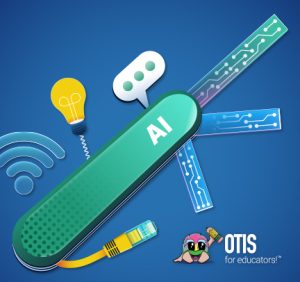
What AI Tools Are Teachers Actually Using?
While having a variety of AI tools at your fingertips is helpful, the number of options can feel overwhelming. In our OTIS for educators session, “Demystifying AI Tools,” we’ll dive into the top AI platforms being used in education. We’ll uncover their ideal use cases, abilities, and limitations so that you can find the best fit(s) […]