Turnkey Middle School STEM: Implementing Standards-Aligned PBL Curriculum and Kits
Marketing Team
Blog
Teq Supports District Implementation: Beyond funding guidance, Teq provides turnkey grant alignment, hardware staging, and certified PD coaching via OTISpd.com to ensure 100% classroom adoption.
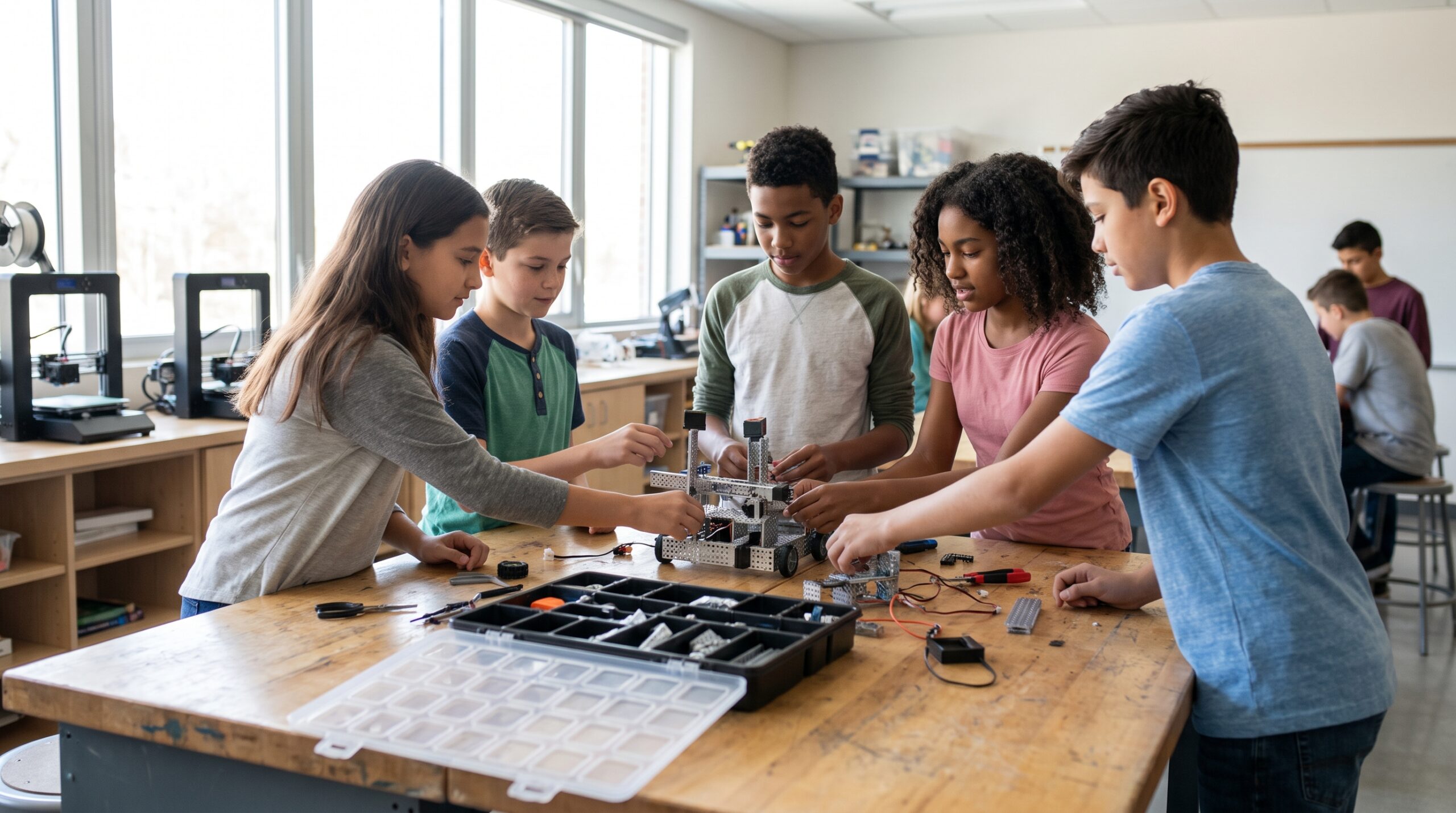
Middle school is a make-or-break time for STEM. It is usually the window where students either get hooked on problem-solving or decide science and math just aren’t for them. But ask any middle school teacher about bringing hands-on Project-Based Learning (PBL) into their classroom, and they will tell you the same story: the excitement is there, but the execution falls apart fast. Districts often buy high-end classroom technology like 3D printers, robotics kits, and microcontrollers, only to watch them collect dust in a maker closet because nobody provided sequenced, ready-to-teach STEAM units to go with them.
Closing that gap means rethinking how we buy and support classroom tech. The schools seeing real traction have stopped buying random hardware or rigid, boxed kits in isolation. Instead, they rely on turnkey PBL systems that connect standards-aligned curriculum blueprints with modular equipment, scheduled consumable refills, and practical teacher coaching.
What is a Turnkey STEM PBL Ecosystem?
In simple terms, a turnkey STEM PBL ecosystem is a complete classroom package. It combines multi-vendor hardware with guided, phenomenon-based lesson plans and embedded professional development. When middle school STEM initiatives fizzle out, it is rarely because a school lacks the technology. The real issue is the instructional void between unboxing a device and running a standards-aligned lesson on a Tuesday morning.
Many legacy STEM suppliers trap schools into proprietary kits with costly, single-use refills and rigid experiments that only work one way. A modern turnkey setup flips that model. It separates the durable tech from the curriculum blueprints, giving teachers the freedom to use open, versatile tools across multiple grade levels and subjects without blowing their budget on replacement supplies.
Scaffolding with NGSS and Differentiated Instruction Strategies
Middle school science curriculum obviously cannot just be fun crafts; it has to align with the Next Generation Science Standards (NGSS). Meeting three-dimensional learning standards means blending Disciplinary Core Ideas (DCIs), Science and Engineering Practices (SEPs), and Crosscutting Concepts (CCCs). Strong turnkey units take care of that heavy lifting by building challenges around genuine, messy problems (like designing flood barriers or testing biomechanical limbs – think UN Sustainable Development Goals) rather than following predictable recipes.
Then comes the everyday classroom reality: a room full of thirty students with completely different comfort levels in math, reading, and tech. Effective STEM programs tackle this head-on with built-in differentiated instruction across three tech levels:
-
Tier 1 (No-Tech & Low-Tech): Students start with cardboard prototyping, physical sketches, and simple mechanical builds before touching a screen.
-
Tier 2 (Mid-Tech): Learners bring physical models to life using drag-and-drop visual block coding and basic circuits.
-
Tier 3 (High-Tech): Advanced students dive into 3D CAD design, text-based programming in Python or C++, and real-time sensor logging.
We also have strong research confirming why this structured, hands-on model works so well. A 2025 study in School Science and Mathematics found that interdisciplinary STEM projects strongly boosted critical thinking (R = 0.866, p < 0.01) and collaborative communication (R = 0.677, p < 0.01). What is more, research in the Journal of General Education and Humanities showed that middle schoolers in structured STEM PBL programs scored dramatically higher in critical thinking assessments than those taught through traditional direct instruction (74.00 vs. 50.28, p < 0.001).
The Operational Triad: Hardware, Consumables, and Teacher PD
Keeping a STEM initiative running past year one comes down to three moving parts: hardware, consumable replenishment, and teacher support.
1. Hardware and Consumables
Too many great STEM programs run out of steam simply because nobody budgeted for glue sticks, filament, or jumper wires. Sustainable programs divide their inventory into two clear buckets. First is durable hardware (like 3D printers, 3Doodler pens, and robotics hubs). Second is a steady stream of pre-packed consumable kits containing the exact motors, servos, and craft materials needed for each cohort. That way, teachers never have to spend their own weekends or paychecks hunting down parts on hobby websites.
2. Integrated Professional Development
Even the best curriculum sits unopened if teachers feel overwhelmed by the technology. Handing an educator a box of sensors without training only creates stress. When professional learning is baked directly into the curriculum rollout, teachers get the confidence they need before students ever walk through the door.
Teq specifically targets this pain point through its iBlocks platform. Rather than offering one-size-fits-all training, Teq pairs flexible PBL units with on-demand and live coaching on OTIS for educators. Because each curriculum block connects directly to micro-credentialed PD modules, teachers get relevant, job-embedded support right when they need it.
Implementation Roadmap for STEM Leaders
If you are mapping out a district-wide or building-level rollout, breaking the process into three practical phases keeps things manageable:
-
Phase 1: Audit: Take stock of the tech already sitting in your buildings and calculate how fast materials get used before buying anything new.
-
Phase 2: Curriculum: Choose adaptable, turnkey PBL units that include built-in low-tech and high-tech tracks for mixed-ability classrooms.
-
Phase 3: PD and Launch: Pair the launch with targeted teacher training and set up an automated, recurring schedule for kit refills.
Key Elements of an Effective Turnkey STEM PBL Package
When evaluating a turnkey PBL solution, school and district leaders should look for a system that removes the planning burden from teachers while delivering rigorous, authentic instruction. A truly effective turnkey package should include several core elements:
-
Standards-Aligned Curriculum Blueprints: Pre-built units mapped directly to NGSS, CTE, and state standards, structured around real-world driving questions (such as environmental cleanup or biomechanics) and student-led capstone projects.
-
Differentiated, Multi-Tiered Tech Pathways: Hardware-agnostic designs offering no-tech, low-tech, and high-tech options, so lessons work seamlessly with the technology your school already owns, from craft materials to 3D printers and microcontrollers.
-
Ready-to-Teach Workbooks & Pacing Guides: Step-by-step teacher facilitation guides, student design journals, and rubrics that save educators over 150 hours of planning time per unit.
-
Pre-Sorted Materials & Consumable Refill Packs: Complete classroom kits stocked with motors, servos, LEDs, and structural supplies, paired with predictable replenishment schedules so projects never stall out.
-
Job-Embedded PD & On-Demand Coaching: Direct integration with educator professional development and micro-credentialing (such as through OTIS for educators), providing practical coaching whenever teachers need it.
-
Career Connections & Transferable Skills: Intentional alignment with Portrait of a Graduate competencies, fostering critical thinking, teamwork, problem-solving, and direct exploration of modern STEM careers.
Conclusion
Turning middle school classrooms into thriving hubs of discovery takes much more than ordering a set of 3D printers or robotics kits. Real impact happens when schools give teachers a clear roadmap: an adaptable STEAM curriculum, reliable materials replenishment, and ongoing coaching. When those pieces come together, technology stops gathering dust and starts doing what it was meant to do, inspiring the next generation of problem solvers.
Ready to transform STEM learning in your district? Reach out to the curriculum team at Teq to see how turnkey iBlocks PBL packages and OTIS professional development can empower your teachers and engage your students from day one.
Related Articles & Other Recommended Reading
How to Safely Store Your AR/VR Headsets for the Summer
As the school year comes to a close, properly preparing your AR/VR hardware for summer storage is essential to extending the lifespan of your investment. Taking a few deliberate steps ensures that when teachers and students return in the fall, their headsets, controllers, and charging carts will be clean, functional, and ready for classroom use. […]
Teq Tuesdays: Summer PD Lineup
Summer is here, and so are Teq’s annual summer PD sessions! Join us on select Tuesdays in July and August for a variety of engaging professional learning experiences. Our summer PD lineup this year dives into unlocking the full potential of AI and brushing up on core Google Workspace skills. All sessions will be broadcast […]
What AI Tools Are Teachers Actually Using?
While having a variety of AI tools at your fingertips is helpful, the number of options can feel overwhelming. In our OTIS for educators session, “Demystifying AI Tools,” we’ll dive into the top AI platforms being used in education. We’ll uncover their ideal use cases, abilities, and limitations so that you can find the best fit(s) […]