4 Gamification Strategies We’ve Learned from Video Games
Christine Bell
Editor
News
Teq Supports District Implementation: Beyond funding guidance, Teq provides turnkey grant alignment, hardware staging, and certified PD coaching via OTISpd.com to ensure 100% classroom adoption.
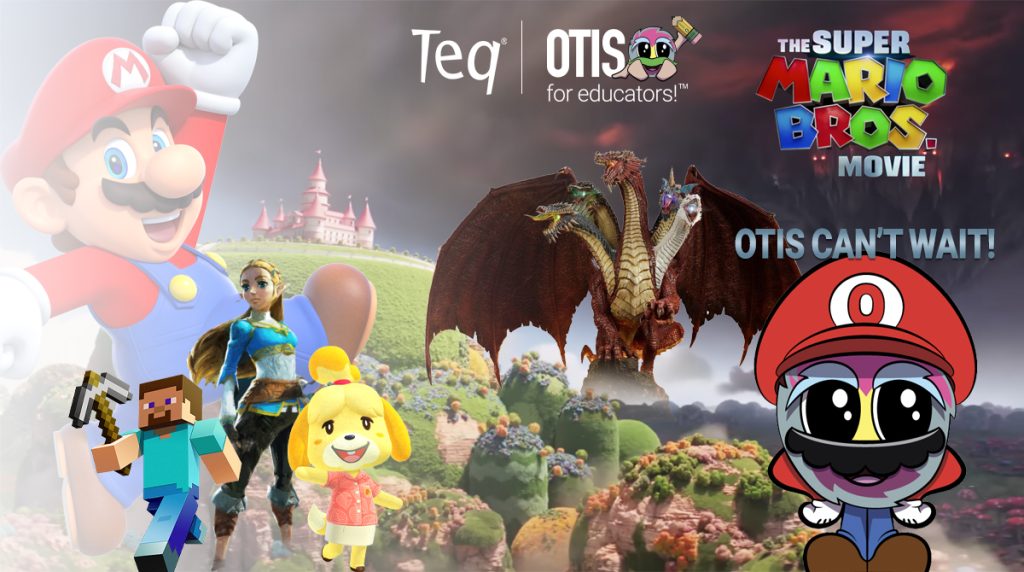
The relentless wave of nostalgia that has consumed so much of pop culture has turned its attention toward video games. While making the jump from movies to games/toys has long been a popular model, the last few years have seen the reverse. Games that were once only for the nerdiest among us are now blockbuster movies (I’m looking at you, Dungeons and Dragons: Honor Among Thieves). The popularity of The Last of Us TV show and the recent, long-awaited release of The Super Mario Bros. Movie are proof that video games are being given the ‘Marvel treatment.’ It begs the question: how do we as educators capitalize on this trend?
Enter gamification. It’s a pedagogical approach that is based on gaming principles and game design elements, which can include (but doesn’t require) game-based activities. You’ve probably already tried it in some form in your classroom, but did you get everything you could out of gamification? Looking for some solid pedagogy to bring your practice to the next level? Want to try some new gamification ideas? Or maybe just a quick template or two to make your life a little easier? Read on, intrepid adventurer! Here’s 4 gamification strategies we’ve learned from video games.
1. Gamification through storytelling
“Our princess is in another castle.” – Super Mario Bros.
A friend of mine liked to tell anyone who would listen that Zelda taught him how to read. He struggled to read in school, but Zelda, that was a different story. He wanted to read because the game required it, and it helped him along through context clues and visuals. The gameplay made the struggle worth it. That level of engagement and dedication is an educator’s dream! The narrative structure present in most games appeals to our human need to connect and to understand the world through stories. In other words, we want to know what happens next. As educators, we can tap into this innate desire and use it to fuel engagement in content that might otherwise not excite.
Offerings from Teq
Appealing to emotion is a clever trick that video game designers use to draw players in and keep them engaged. When gamifying a class, storytelling is a great way to up the emotional factor and therefore students’ connection to the content. Not an ELA teacher? Not to worry, check out some OTIS courses on how to include storytelling in STEM subjects – this can include incorporating that all-important SEL in your lessons, using robotics, or even just connecting your content to a real-life application (e.g., “Geometry is important because we can’t 3D print this super cool personal logo without it.”).
Storytelling is a great way to structure lessons, but it’s also an essential skill that will prepare students for their futures. Regardless of what they decide to do, communication skills and being able to sequence are sure to come in handy. It’s a major feature of the Create a Video Game iBlock, a project-based learning experience in which students create a video game of their own. Project-based learning is a great way to explore story structure with students (for more storytelling PBL, check out the Building Literacy series), and it also happens to be a great way to introduce design thinking— used to make, you guessed it, video games!
2. Leveling up: quests, achievements, and badges
“Don’t wish it were easier, wish you were better.” – Animal Crossing
In the same way that a good story gets you invested, video games include other emotional elements designed to keep you interested. Think about the frustration of a hard task, the satisfaction of racking up achievements, and the dopamine hit of winning. All of these elements connect you to the content, and they can all be used in the classroom. Not only that, teaching students how to persevere despite any challenges is essential. Sometimes, that is easier said than done – I’m sure we’ve all experienced a student giving up or acting out in frustration at a difficult task.
Gamification provides ways to motivate students to overcome difficulties, find alternative solutions, and think critically. Gamification elements like awarding badges for completing tasks, giving points for achieving goals, and leveling challenges (hello, scaffolding!) provide extrinsic motivation, that hopefully, over time, will translate into intrinsic motivation to learn and achieve. Take a game like Minecraft – it combines these elements so well that it has launched an Education Edition.
Make learning fun!
The best part about adding game elements is that you don’t have to re-do your lessons or change your entire syllabus. Start small and build up. It’s all about weaving these elements into your lessons in an organic way. You can certainly still use tried-and-true educational games like the ever-popular Jeopardy! for unit review. However, you want to think about ways to include game elements in everyday instruction. This doesn’t mean you need to include game-based activities necessarily. Including a quest or using adventure language to frame your activities is more exciting than just explaining a goal or task. Something as simple as a progress tracker, or awarding badges for achievements is a form of gamification that is relatively easy to implement.
Once you’ve started gamifying in small ways, it becomes easier to think a bit bigger. For example, implementing a points system or some other form of token economy in your classroom. Bringing in these elements gives weight to accomplishments in a tangible way and will inspire your students to ‘level up’ both in the classroom and beyond.
3. Gamify teamwork and choice
“It’s dangerous to go alone! Take this.” – The Legend of Zelda
One of the best parts of video games is playing it with your friends. Sharing the joy of achievement makes it that much better and video games do this in so many ways – from public arcades to MMORPGs. We already know how important it is to be able to collaborate with others and you’re probably already asking students to collaborate regularly, but is this gamification or not? It certainly can be considered gamification, especially if you are framing it that way. Think of it like this: it’s the difference between viewing someone as a project collaborator versus seeing them as a teammate. Fostering a “shared objective” mindset makes all the difference. Remember, just like in video games, collaboration can be cooperative (us vs. the monster) or competitive (us vs. the other teams/ us vs. the computer).
Giving power back to students
It’s also about having the right tools for the job and choosing how you want to accomplish the task at hand. You can’t complete the quest and defeat the final boss if you never found the magic sword or gained that special ability. So it is in the classroom, showing students the why and the how of academics is so important. But more than that, we need to make sure that they have meaningful choices.
Like in a video game, choices affect outcomes and the act of making the choice makes the task more realistic and the outcome more powerful. You can gamify this even more by creating game-based activities or including other game elements to gamify your student choice activities. You can also get students involved in thinking about what choices to offer and how decisions affect outcomes with a PBL unit like designing a board game or creating your own escape room.
4. Gaming fun and the power of memory
“My past is not a memory. It’s a force at my back. It pushes and steers.” – Metroid
So why should you include any of these elements in your classroom? Well for one, it makes things more fun. While there has been some pushback against the belief that gamification ‘just means playing games in the classroom,’ I think there is value in remembering that these strategies come from gaming, and we game because it’s fun. The fun is not the goal, it’s the result. Games are a sum of their parts, and if you are adding these elements into your lessons, the result should be that students are more engaged, more excited, and having more fun.
More great solutions
The reason for all this game nostalgia we are currently seeing is because these are the collective memories of our childhoods that have stuck with us. We should always strive to teach lessons that have that kind of staying power. So how do we do this? Well, get students involved in gaming and show them what they need to be good at to create their own games (hint: it’s all the stuff you just read about in this blog).
Start with a particular product or program like Scratch, or Makey Makey to teach computer science skills. Take a simple board game template and put a spin on it to focus on skills or concepts you are teaching. Make what students need to learn practical and real for them. Have them solve a problem, like in the Assistive Game Controller iBlock, where students solve the problem of video game accessibility while building research and engineering skills.
No matter what approach you take, gamification is a winning strategy for the classroom. Hopefully, you now have some more ideas on why it works and how to go about incorporating it in your lessons. There’s plenty to get your started linked above. We’d love to hear how you’re gamifying your class or using media for educational benefits – reach out to us on social!
For more tips, tricks, and tools for teaching in and out of the classroom, check out more content on the Teq Talk blog or our YouTube channels OTIS for educators and Tequipment.
We also offer virtual professional development, training, and support with OTIS for educators. Explore the technology and strategies that spark student success — no matter where teaching or learning are happening!
Follow us on social:
 edteq
edteq  OTIS4educators | Teq Products | iBlocks
  OTIS4educators | MyTeq
  Teq
Teq
0 thoughts on “4 Gamification Strategies We’ve Learned from Video Games”
Related Articles & Other Recommended Reading

How to Safely Store Your AR/VR Headsets for the Summer
As the school year comes to a close, properly preparing your AR/VR hardware for summer storage is essential to extending the lifespan of your investment. Taking a few deliberate steps ensures that when teachers and students return in the fall, their headsets, controllers, and charging carts will be clean, functional, and ready for classroom use. […]

Teq Tuesdays: Summer PD Lineup
Summer is here, and so are Teq’s annual summer PD sessions! Join us on select Tuesdays in July and August for a variety of engaging professional learning experiences. Our summer PD lineup this year dives into unlocking the full potential of AI and brushing up on core Google Workspace skills. All sessions will be broadcast […]
What AI Tools Are Teachers Actually Using?
While having a variety of AI tools at your fingertips is helpful, the number of options can feel overwhelming. In our OTIS for educators session, “Demystifying AI Tools,” we’ll dive into the top AI platforms being used in education. We’ll uncover their ideal use cases, abilities, and limitations so that you can find the best fit(s) […]