Purposeful Screen Time: Shifting K-12 Classrooms from Passive Scrolling to Active Learning
Marketing Team
Blog
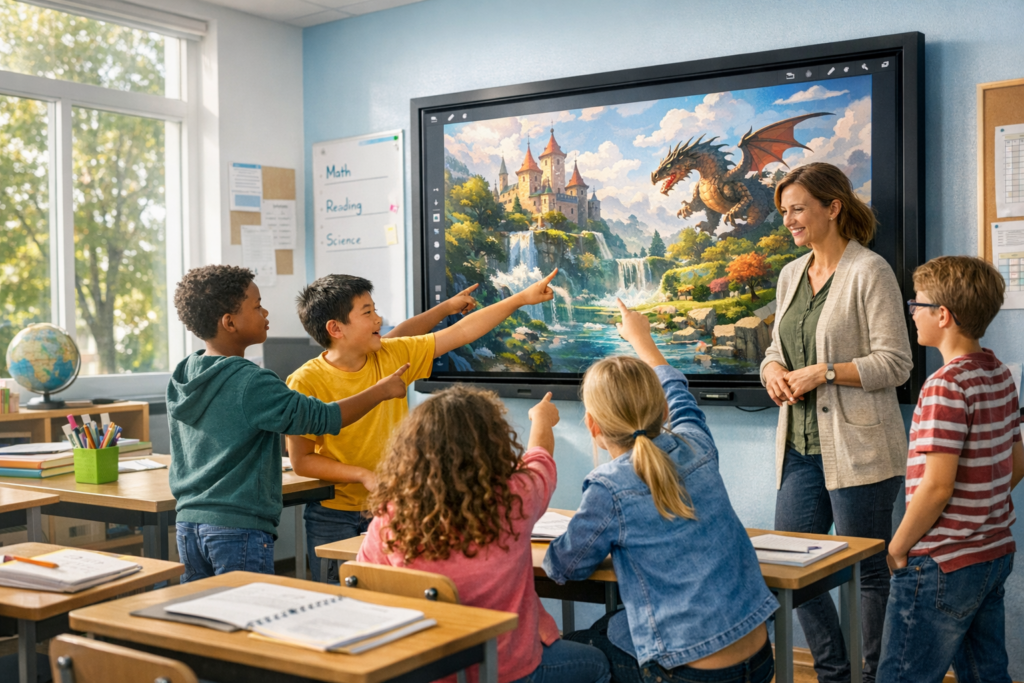
As K-12 school districts across the United States have achieved near-universal 1:1 device deployment, the national conversation surrounding digital exposure has reached a critical inflection point. For years, parents, policymakers, and administrators have debated total hours spent on devices, but recent developments in 2024–2026 have reframed this narrative. Federal guidelines and educational researchers now emphasize that the fundamental issue is not the duration of screen exposure, but the pedagogical intent behind educators’ technology. To shift from passive digital consumption to high-impact active learning, schools are increasingly turning to strategic instructional ecosystems, replacing isolated scrolling with interactive environments powered by a SMART Board and supported by targeted courses for professional development.
What is Purposeful Screen Time?
Purposeful screen time is defined by intentional instructional design where technology acts as a catalyst for student voice, peer collaboration, problem-solving, and multimodal creation. Rather than treating all digital exposure as equal, this framework differentiates heavily between active and passive device usage.
-
Passive Screen Consumption: This occurs when students are isolated on devices, engaging in activities like algorithmic multiple-choice test prep, filling out static digitized worksheets, or watching video lectures without reflective checkpoints. Research highlights that passive consumption shortens attention spans, induces digital fatigue, and reduces information retention.
-
Active Purposeful Screen Time: This is characterized by dynamic usage where students co-create, collaborate in real-time, and manipulate digital concepts. Active use promotes higher-order critical thinking, strengthens classroom community, and deepens conceptual understanding.
The Impact of Screen Type on Student Outcomes
A large-scale longitudinal study published in the International Journal of Behavioral Nutrition and Physical Activity established that the effects of screen time on school-aged children are heavily moderated by screen type. While passive screen time is linked to poorer educational metrics, interactive and educational screen use produces positive educational outcomes without adverse social impacts.
The 2026 EdTech Policy Shift
Recent federal and clinical guidelines have officially shifted from proposing arbitrary hour limits on classroom screens to demanding intentional, active pedagogical applications.
In August 2026, the U.S. Department of Education issued groundbreaking official guidance. Through a Dear Colleague Letter, Assistant Secretary Kirsten Baesler urged districts to evaluate technology investments based on measurable learning outcomes rather than total minutes spent on screens. The guidance calls for schools to demand evidence of effectiveness and prioritize edtech solutions backed by clear implementation frameworks grounded in active classroom practice (reported via THE Journal and Education Week).
Similarly, the American Academy of Pediatrics (AAP) through its Center of Excellence Guidance states that there are no set numerical screen time limits for schools. Instead, the AAP advises districts to eliminate passive uses and maximize active applications like immersive simulations and multimedia design.
A 4-Step Guide to Transforming Classroom Device Usage
Transitioning a school’s culture requires replacing passive content consumption with interactive, student-centered technology solutions. Here is a practical framework for converting K-12 classrooms into active learning hubs.
Step 1: Audit Current Technology Practices
Before implementing new solutions, districts must recognize the “digital use gap.” According to the Project Tomorrow Speak Up Research Project National Report, while over 90% of schools maintain 1:1 device access, 75% of high school students report that their primary classroom technology use consists of simply taking online quizzes. Only 30% of students in grades 6–12 are given opportunities to use digital tools for collaboration or multimedia creation. Identifying where your classrooms fall on this spectrum is the crucial first step.
Step 2: Center Instruction Around Interactive Hubs
To break the isolation of 1:1 screens, educators must establish a shared focal point in the classroom. Deploying interactive hardware like SMART Boards shifts the instructional environment away from solitary consumption toward shared, collaborative experiences.
Research found in the ERIC database on SMART Board Technology Integration reveals that combining strong pedagogy with interactive display technology significantly elevates student on-task behavior and maintains high levels of engagement across multi-component lessons.
Step 3: Implement Collaborative Active Learning Software
Static lessons must be transformed into dynamic environments using cloud-based software suites like Lumio by SMART. These platforms foster peer-to-peer discussion and student autonomy.
-
Elevating Student Voice: Features like collaborative whiteboards and anonymous response tools allow all students—including anxious learners—to share ideas synchronously on the main display.
-
Flexible Pacing: Teachers can toggle between teacher-guided instruction and student-paced discovery, delivering real-time formative feedback.
-
Measurable Results: A 2025 peer-reviewed study in KONSTAN – Jurnal Fisika dan Pendidikan Fisika evaluated high school classrooms utilizing Lumio. The study demonstrated statistically significant improvements, with student active learning levels rising from 69.03 in traditional classrooms to 83.57 in Lumio-supported environments. Furthermore, internal SMART engagement data shows that 98% of surveyed educators confirm Lumio successfully ignites student engagement.
Step 4: Invest in Job-Embedded Professional Learning
Deploying high-quality hardware is only half the equation. To achieve meaningful, lasting pedagogical change, educators must be trained on active learning methodologies rather than basic operational functions.
As a dedicated K–12 educational technology partner, Teq equips school districts with comprehensive ecosystem support. Through platforms like OTIS for Educators, Teq delivers targeted courses for professional development designed to help teachers master interactive lesson delivery, blended learning models, and active learning strategies.
Bridging the Gap: The Teq Essentials Approach
The true measure of educational technology is not the amount of time a screen is turned on, but whether that screen is being used to foster active inquiry, collaborative problem-solving, and measurable student achievement.
To support this transition, districts can leverage the Teq Essentials subscription, which bridges hardware and professional learning by combining access to OTIS Online PD, onsite instructional support, and SMART software licensing into a unified district package. Grounding edtech procurement in ongoing, job-embedded professional learning helps districts eliminate the “digital design divide” and ensures classroom devices deliver measurable student growth.
Conclusion
Shifting the narrative around screen time requires K-12 administrators and teachers to focus on the quality of digital interaction rather than simply the quantity of minutes. By evaluating educators’ technology based on its capacity to drive engagement, replacing passive worksheets with active collaboration via a SMART Board, and investing in ongoing courses for professional development, school districts can transform 1:1 screen exposure into a high-impact engine for active learning.
Related Articles & Other Recommended Reading

Beat the June Burnout: 7 Low-Stress PD Sessions to Prep for Next Year
The countdown is on! Whether you’re a teacher officially on break or school is still in session, we’re celebrating another successful year. You’ve earned the time off to relax and maintain your skills with OTIS for educators! We’ve got tons of engaging PD courses all year round and have curated courses that will perfectly pair […]

Catch Teq at ISTE 2026!
Teq is ecstatic to attend the annual International Society for Technology in Education (ISTE) Live26! We’re excited to connect with educators and leaders alike to integrate cutting-edge edtech solutions that transform classroom instruction. Taking place from June 28th to July 1st, 2026, this top-notch event is being held at the Orange County Convention Center in […]
Go Beyond the Sticker Chart!
While sticker charts may appear to be harmless fun, there are a variety of reasons why educators should consider pivoting away from them. Let’s dive into practical strategies that rise above external rewards to build a lasting framework. It’s time to go beyond the sticker chart! Why Pivot? Ultimately, sticker charts can highlight student inequalities […]